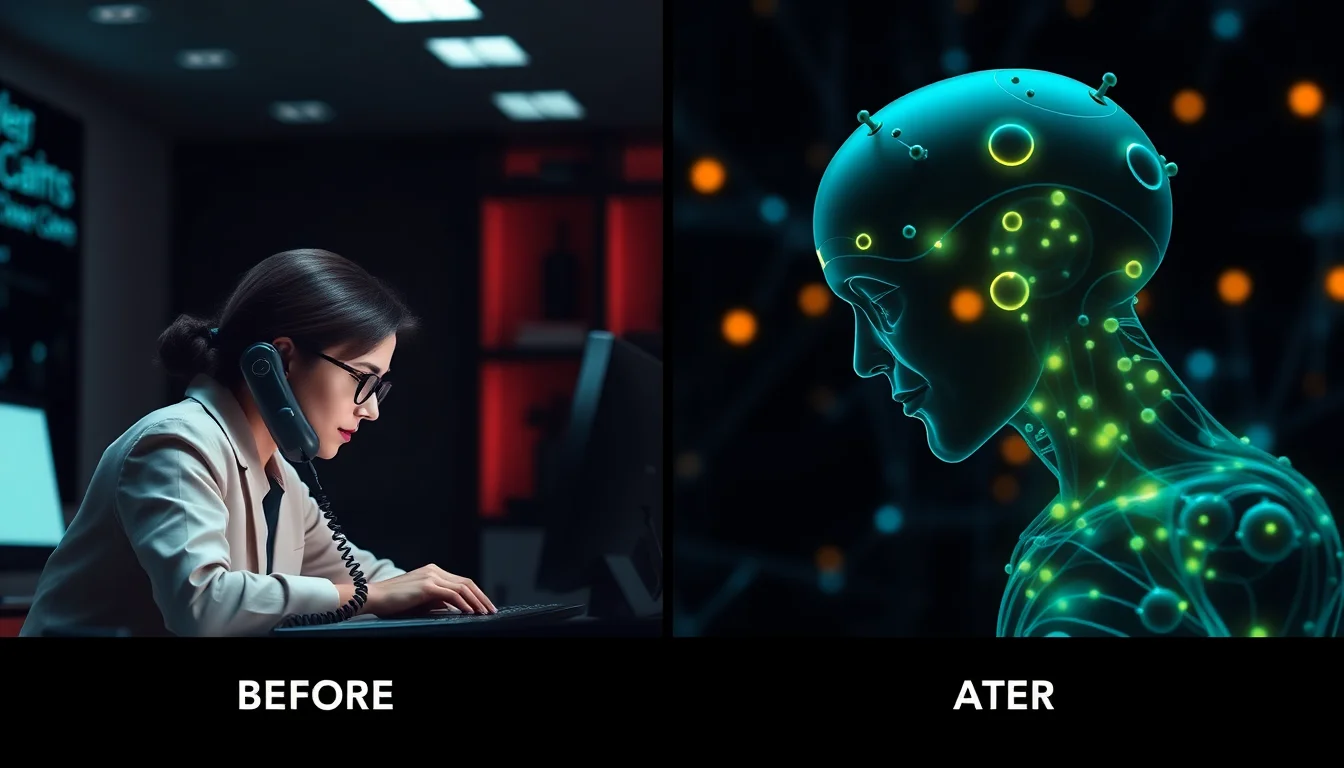

The word "autonomous" gets thrown around a lot in IT marketing. Most of the time, it means "we added an AI chatbot to our ticketing system" or "our dashboard has a new AI summary feature." That's not autonomous IT. That's a smarter interface on the same slow, human-dependent workflow.
Autonomous IT monitoring — the kind we've built at CyberCore — means something specific: the monitoring agent on your workstation detects problems, evaluates their severity, executes a fix, and reports what happened — all without a human initiating the response. When Open Dental crashes at 10:14 AM, the agent doesn't create a ticket and wait for a technician. It restarts the application in 22 seconds and logs the full diagnostic data for review.
The Traditional MSP Workflow: 7 Steps, 45+ Minutes
Here's what happens when dental software crashes under a traditional managed service provider model:
- Detection — Your staff notices the software is gone. (The MSP's monitoring tool may or may not detect the crash, depending on what it monitors.)
- Reporting — Your office manager calls the MSP help desk or sends an email. Time spent: 2–5 minutes.
- Ticket creation — The help desk creates a support ticket and assigns a priority level. Time spent: 3–5 minutes.
- Queue — The ticket sits in a queue until a technician is available. This is where most of the delay lives. Time spent: 10–30 minutes.
- Diagnosis — The technician remotes into the workstation, checks Event Viewer (maybe), restarts the application or reboots the computer. Time spent: 10–15 minutes.
- Resolution — The software is back. The technician confirms it's working and closes the ticket. Time spent: 5 minutes.
- Documentation — The technician writes ticket notes (briefly, if at all). The root cause is rarely investigated.
Total time from crash to resolution: 45 to 75 minutes. Total cost to a 6-operatory practice: $1,300 to $1,900 per incident.
The Autonomous Monitoring Workflow: 3 Steps, 22 Seconds
Here's the same crash under autonomous monitoring:
- Detection + Evaluation — The CyberCore agent detects the process exit and checks six signals: exit code (0xE0434352 = .NET crash), foreground state (active), Windows Error Reporting (Event ID 1000 fired), time of day (peak hours), process uptime (3 hours — not a startup failure), and system shutdown status (not shutting down). Verdict: real crash. Time: 5 seconds.
- Remediation — The agent checks the database backend (MySQL or SQL Server). Database is responsive. The crash was application-side. Agent restarts the dental software and waits for the main window to appear. Time: 12 seconds.
- Reporting — The agent logs the incident with full telemetry: exit code, crash timestamp, faulting module, recovery action taken, recovery confirmation. If this crash pattern has occurred more than three times in 24 hours, it escalates to a human with the complete diagnostic history. Time: 5 seconds.
Total time: 22 seconds. Your front desk sees the software reappear on their screen. The patient never knew anything happened.
Watch → Protect → Fix → Report — the four-step cycle that runs on every CyberCore-monitored workstation, 24/7. Over 50 detection capabilities and 30+ automated playbooks cover the most common dental IT failures.
What Autonomous Monitoring Actually Covers
Crash recovery is the most visible capability, but autonomous monitoring extends across the full IT stack of a dental practice:
- Software crash detection and auto-restart — Open Dental, Dentrix, Eaglesoft, and imaging software. The agent distinguishes real crashes from normal closes using the six-signal evaluation framework.
- Backup monitoring — The agent monitors backup job status (success, failure, warnings) and alerts when backups fail or when the backup volume is approaching capacity.
- Disk health and space monitoring — SMART disk health data, free space tracking, and alerts when drives are failing or the server is running low on space (a common precursor to database crashes in both Open Dental and Dentrix).
- Windows service monitoring — Critical services like the Open Dental eConnector, Dentrix DTX launcher, imaging bridges, and print spooler are monitored continuously. If a service stops unexpectedly, the agent restarts it.
- Sensor and device detection — USB-connected dental sensors (DEXIS, Carestream, Schick) are tracked. When a sensor that was previously connected disappears, the agent alerts immediately.
- Security event monitoring — Failed login attempts, disabled security services, unusual process execution, and other behavioral indicators that may signal a security threat.
- Network connectivity — DNS resolution, gateway reachability, and latency to critical services. The agent detects network issues that affect database connectivity before they cause application crashes.
Autonomous Doesn't Mean "No Humans"
A common misconception: autonomous monitoring replaces your IT team. It doesn't. It replaces the repetitive, time-sensitive first-response work that consumes 80% of a traditional MSP's ticket volume. The remaining 20% — complex server migrations, network redesigns, new equipment deployments, strategic planning — still requires human expertise.
What changes is the role of the human. Instead of spending their day restarting crashed applications and checking why a backup failed, your IT provider (or CyberCore's human escalation team) focuses on the issues that actually require judgment: investigating recurring crash patterns, planning infrastructure upgrades, evaluating new technology for your practice.
The agent handles the routine. Humans handle the complex. The practice gets faster recovery, fewer disruptions, and IT support that doesn't depend on someone being available to answer the phone.
Measuring the Difference
Here's what practices typically see after switching from traditional MSP monitoring to CyberCore's autonomous model:
- Mean time to recovery (MTTR) drops from 45–75 minutes to under 30 seconds for covered scenarios.
- Ticket volume decreases by 60–70% because the agent resolves routine issues before they become tickets.
- False alerts drop to near zero because the six-signal evaluation framework filters out normal process exits, scheduled reboots, and intentional shutdowns.
- Staff disruption decreases because the front desk no longer needs to call IT, describe the problem, and wait on hold while patients wait in chairs.
Autonomous IT monitoring is not a marketing term. It's a measurable shift from reactive, human-dependent support to proactive, agent-driven detection and remediation. The technology exists. The practices running it recover faster, experience fewer disruptions, and spend less time on the phone with their IT provider.