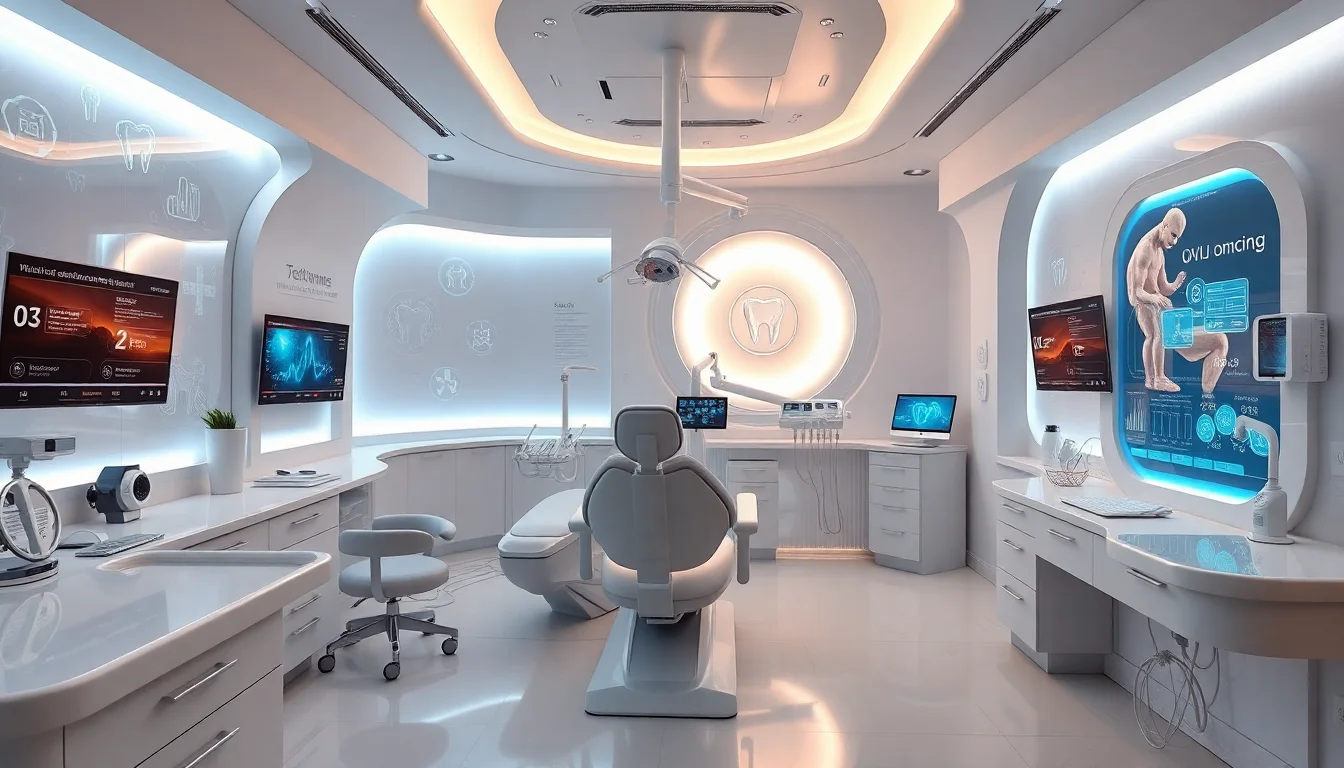

Dental practices are running technology from three different decades simultaneously. The panoramic imaging unit might be from 2015. The practice management software might be a version released in 2020. The workstations are running Windows 11. And the network connecting it all was designed when the practice opened in 2008. That mix of old and new creates IT complexity that most industries don't face — and it's about to get more complex as cloud software, artificial intelligence, and connected devices enter the picture.
But not every trend is ready for your practice today. Some are production-ready and delivering value right now. Others are promising but still immature. And some are vendor marketing that won't be real for years. Here's an honest assessment of where dental practice technology stands and where it's heading.
Cloud Practice Management: Ready Now, with Tradeoffs
The biggest shift in dental software is the migration from on-premise to cloud-based practice management systems. Dentrix Ascend (Henry Schein), Curve Dental, tab32, and Oryx are all cloud-native platforms that run in a web browser instead of on a local server.
What cloud PMS delivers right now:
- No local server required — The database runs in the vendor's cloud infrastructure. You don't need to buy, maintain, or back up a server. The vendor handles all of that.
- Access from anywhere — Log in from any device with a browser. Practice owners can check the schedule from home. Multi-location groups can manage all locations from one interface.
- Automatic updates — No more scheduling Dentrix updates on a Saturday morning. The vendor pushes updates to the cloud platform continuously.
- Reduced IT complexity — No SQL Server Express size limits, no Crystal Reports DLL conflicts, no local database maintenance. The entire application runs in the vendor's environment.
The tradeoffs are real:
- Internet dependency — If your internet goes down, your practice management system is inaccessible. On-premise Open Dental or Dentrix G7 works perfectly fine without internet. Cloud PMS does not.
- Performance depends on bandwidth — Loading a chart with 50 X-ray images over a 25 Mbps connection is noticeably slower than loading it from a local server. Practices with limited or unreliable internet will feel the difference.
- Data control — Your patient data lives in the vendor's cloud. You trust their security, their backup strategy, and their business continuity plan. If the vendor has an outage or (in a worst case) goes out of business, your data access depends on their infrastructure.
For practices with reliable internet (100+ Mbps) and a tolerance for vendor dependency, cloud PMS is ready now. For practices in rural areas or those that need guaranteed uptime regardless of internet status, on-premise systems remain the safer choice.
AI-Assisted Diagnostics: Useful Today, Not a Replacement
AI for dental diagnostics — primarily caries detection and periodontal disease assessment on radiographs — has moved from research to commercial products. Overjet and Pearl are the two most widely deployed AI diagnostic platforms in U.S. dental practices.
What they do well: highlight potential caries, bone loss, and other findings on periapical and bitewing radiographs. They serve as a second set of eyes, catching things that a clinician scanning through dozens of images per day might miss. Studies show AI detection of proximal caries is comparable to specialist-level performance.
What they don't do: replace clinical judgment. AI diagnostics are decision support tools, not decision-making tools. They flag potential findings for the clinician to confirm or dismiss. They don't account for patient history, clinical context, or the nuances that experienced clinicians weigh when making treatment decisions.
The IT implications are modest for cloud-based AI platforms — images are uploaded to the vendor's cloud for analysis and results return in seconds. For practices considering AI diagnostics, the main technical requirements are a stable internet connection and imaging software that integrates with the AI platform's API.
IoT and Connected Equipment: Early Stages
Internet of Things (IoT) in dental practices is still nascent. The vision is compelling: every piece of equipment — compressors, sterilizers, handpiece maintenance systems, HVAC — reports its status to a central monitoring system. When the compressor's pressure drops or the sterilizer's temperature drifts, an alert fires before the equipment fails during patient care.
The reality is that most dental equipment manufactured before 2023 has no network connectivity. Newer equipment from some manufacturers is starting to include monitoring capabilities, but there's no standard protocol — each vendor uses their own proprietary system. A unified dashboard that monitors all your equipment from all manufacturers doesn't exist yet.
What practices can do now: use IP-connected environmental sensors (temperature, humidity) in the server room and sterilization area. These are inexpensive, easy to deploy, and provide real value — a server room that overheats on a July weekend destroys equipment. A sterilizer that drifts out of temperature range compromises patient safety. These are solvable problems with current IoT technology.
Autonomous IT Monitoring: Here Now
The shift from reactive IT support to proactive and autonomous monitoring is not a future trend — it's happening in dental practices today. Traditional MSP support follows a detect-call-wait-fix cycle that takes 45 to 75 minutes per incident. Autonomous monitoring compresses that to seconds by putting the detection and remediation logic on the endpoint itself.
CyberCore's agent monitors dental software processes, backup jobs, disk health, network connectivity, sensor connections, and security events continuously. When it detects a problem — a Dentrix crash, a failed backup, a sensor disconnection — it evaluates the severity, executes the appropriate remediation playbook, and reports what happened. For the 80% of issues that follow known patterns, the response is fully autonomous. For the 20% that require human judgment, it escalates with the full diagnostic context already collected.
This model works because dental IT problems are predictable. After analyzing 100,000+ support tickets, the crash patterns, the failure modes, and the resolution steps are well-documented. An autonomous agent that knows these patterns handles routine incidents faster and more consistently than a human technician working from memory.
Where to Put Your Technology Budget in 2026
If you're planning technology investments for your practice, here's where the return is highest right now:
- Network infrastructure — If your network is more than 5 years old, upgrade to managed switches with VLAN support and WiFi 6 access points. This is the foundation for everything else. Budget: $2,000–$5,000 depending on practice size.
- Reliable, tested backups — If your backup strategy is a USB drive plugged into the server, upgrade to a cloud backup solution with immutability and automated testing. Budget: $150–$400/month.
- Continuous monitoring — Whether you choose CyberCore or another dental-specific monitoring solution, move beyond reactive break-fix support. The cost of proactive monitoring is a fraction of the cost of the downtime it prevents.
- Internet redundancy — If you're on cloud PMS or considering it, add a secondary internet connection (cellular failover is the easiest option). When your primary ISP goes down, the failover keeps your practice management system accessible. Budget: $50–$100/month for cellular failover.
The dental practices that thrive over the next five years will be the ones that treat their technology infrastructure as a strategic asset — not as an expense to minimize. The right investments in network design, data protection, and monitoring create a practice that runs reliably, recovers instantly from disruptions, and adapts to new technology as it matures.